.png?width=400&height=133&name=TRUE%20STONE%20LOGO%20(1).png)


A step‑by‑step guide to siting, permitting, and building rural Texas Hill Country pools.
Siting a pool around wells, septic, slopes, and Hill Country views
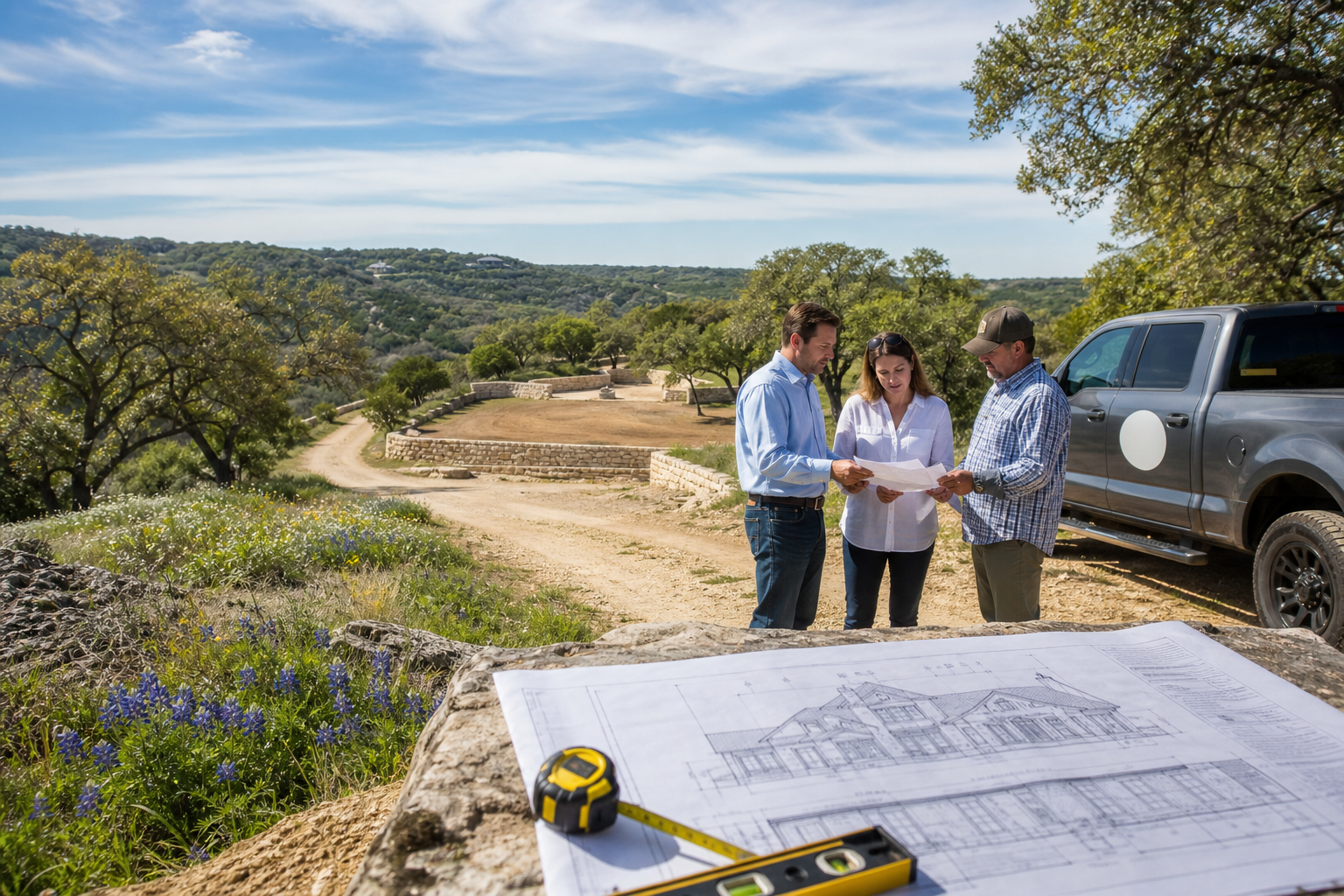
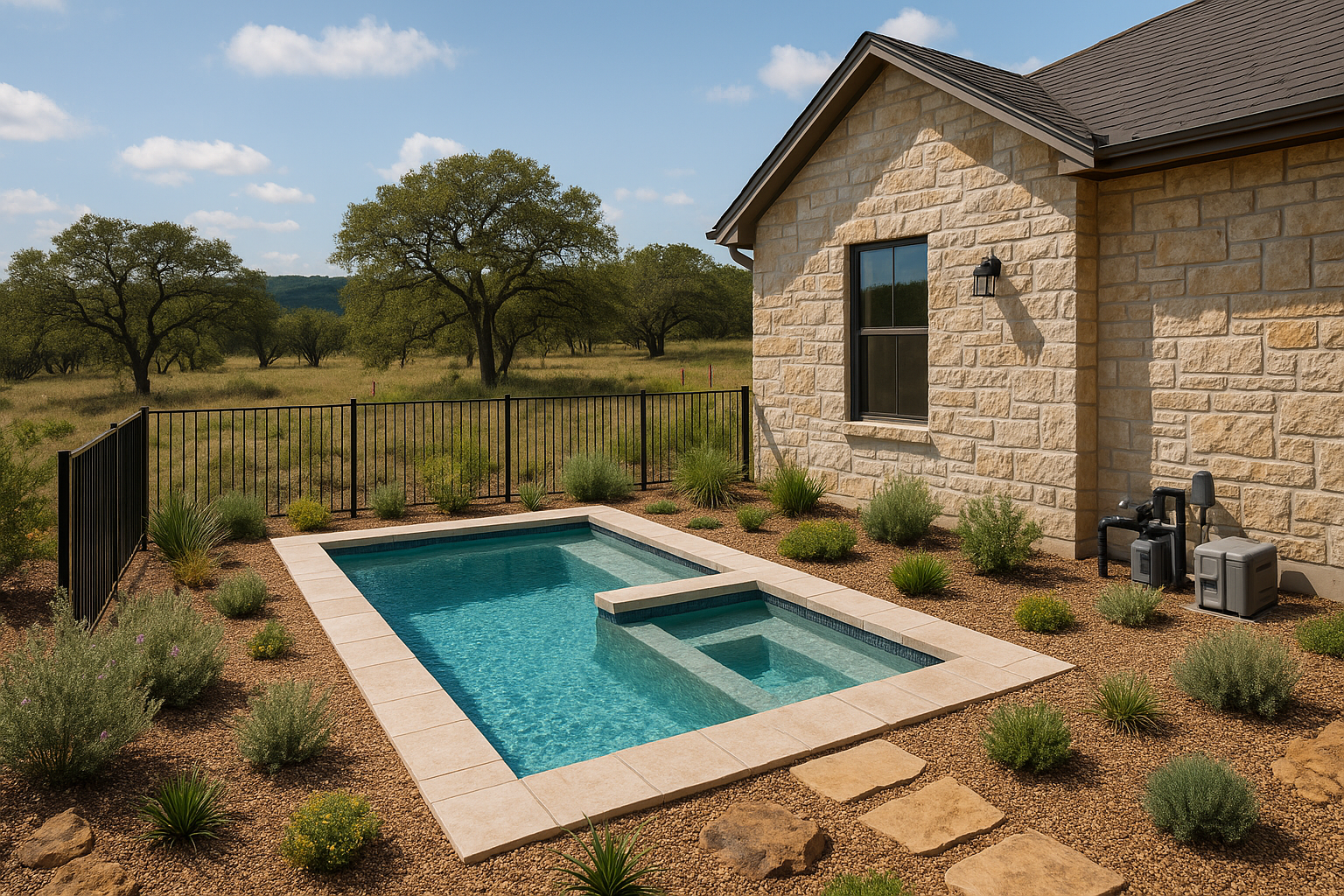
A pool can be the perfect complement to a Hill Country custom home: a place to cool off, gather with family, and enjoy the landscape from the water’s edge. On rural lots, though, getting a pool right requires careful siting and coordination with wells, septic systems, utilities, and local rules. Begin with a site plan that shows your home footprint, driveway, septic tank and field (or proposed OSSF area), well location if applicable, topography, and prevailing winds. Stake candidate pool locations and stand there at different times of day to evaluate sun, shade, and views. In the Hill Country, compact plunge pools and small spas often make the most sense: they’re easier to fit around live oaks, terraces, and rocky outcrops; they require less water; and they’re simpler to heat or cool for shoulder seasons. Setbacks drive feasibility. Keep pools and decks outside septic setbacks and reserve areas; maintain required distances from property lines, wells, and waterways; and coordinate with your driveway and access path so equipment trucks can reach the dig area without damaging tree protection zones. Consider privacy and wind: place seating and shallow zones where afternoon breezes are comfortable, and use low walls or plantings to cut gusts without blocking views. Where slopes are significant, step the deck to match grade and plan sub‑surface drainage to move stormwater away from the pool and house. Think ahead about operation and maintenance. On rural sites, leaves, pollen, and dust can be intense during certain seasons; specify skimmer locations and returns that encourage circular flow patterns, and choose a cleaner strategy (robotic or pressure‑side) before plumbing is finalized. Opt for variable‑speed pumps and automated chlorination to keep energy use and upkeep down. If you love night swims, design dark‑sky friendly lighting: full‑cutoff, warm fixtures for the deck and low output, shielded pool lights that won’t wash out your starry sky. For context on dark‑sky and lighting best practices, see DarkSky International at DarkSky International and Hill Country Alliance guidance at Hill Country Alliance: Night Skies. With a data‑driven plan and a builder who understands rural utilities, you’ll avoid surprises and land on a pool layout that feels inevitable on your lot.
Design, safety, and code: fencing, bonding, covers, and drains
Beyond looks, your pool must meet safety, structural, and electrical standards designed to protect families. Texas has adopted the International Swimming Pool and Spa Code (ISPSC) by reference for many jurisdictions, and cities like Austin publish local adoptions and FAQs. Review the model code here: 2021 International Swimming Pool and Spa Code and Austin’s adoption documents at City of Austin ISPSC adoption (PDF). Texas DSHS maintains statewide rules for pools and spas, including safety and sanitation standards; see Subchapter L here: Texas DSHS: Pool & Spa Rules (Subchapter L) and the separate adoption notice referencing ISPSC at DSHS ISPSC Adoption Notice (PDF). Key safety items include four‑sided barriers with self‑closing, self‑latching gates; door and pool alarms where applicable; anti‑entrapment drains; and, for spas, listed covers. Electrical bonding is critical to equalize voltage and protect swimmers—coordinate early with your electrician. For a plain‑language primer on pool bonding, see this technical overview: Pool bonding basics. If you have young children or host guests, layer defenses: mesh safety fencing inside the code fence, alarms, and strict supervision protocols. For broader drowning‑prevention guidance in Texas, see state resources at Texas HHS Water Safety toolkit and medical best practices from Texas Children’s: Drowning prevention. Engineering details matter on Hill Country soils. Many rural pools sit near septic equipment—never place a pool, footing, or deck over tanks, laterals, or required reserve areas. Confirm setbacks from your OSSF designer and revisit the TCEQ homeowner guide for separation distances and permitting basics: Texas OSSF Design Guide (PDF). On rocky sites, structural shells may need special reinforcement and careful over‑excavation; drainage around the deck must move water away from the home and septic field. Finally, plan a water strategy. If you rely on a private well, consult your driller about capacity and recovery rate before filling; some owners choose water delivery for initial fill to protect well pumps. Pair the pool with a landscape of drought‑tolerant natives to reduce splash‑out watering and maintain the Hill Country aesthetic.
Budget, contracts, utilities: building a pool the right way
Treat your pool like a mini construction project with its own plan, schedule, and budget guardrails. Ask builders for detailed proposals that itemize excavation, steel, shell, plumbing, equipment (pump type, filter media, sanitizer), decking, fencing, electrical, and allowances for rock hammering—common in limestone country. Require documented equipment models and warranties up front, and include change‑order rules with unit prices for rock excavation. Coordinate inspections so trenches aren’t open for extended periods and so bonding/steel are verified before shotcrete or gunite. Budget realistically for ongoing costs and choose efficient equipment. Variable‑speed pumps, cartridge filters, and saltwater chlorination can cut operating cost and maintenance. Smart controllers and automation help manage schedules, lights, and heaters from your phone. Design with safety and privacy in mind—fencing that shields views, gates placed for supervision, and lighting that is shielded, warm, and on motion sensors to preserve the night sky. For code and best‑practice refreshers, keep accessible references like the ISPSC overview linked above and practical maintenance guidance from the CDC’s Healthy Swimming hub: CDC Healthy Swimming. Finally, integrate the pool project with the rest of your build. Confirm utility corridors so pool power and data run alongside house conduits where possible; ensure propane or natural gas lines for heaters are sized and routed with required separations; and reserve storage for chemicals away from mechanical rooms and wells. If you’re in an HOA, check design rules for fencing styles, equipment screening, and noise. Document as‑builts (equipment pad layout, buried lines, and shutoffs) for future service and resale. Done right, a compact plunge or full‑size pool can be a low‑maintenance, high‑comfort addition that looks like it grew from your Texas Hill Country lot—and doesn’t surprise you with avoidable code corrections or costs.