.png?width=400&height=133&name=TRUE%20STONE%20LOGO%20(1).png)


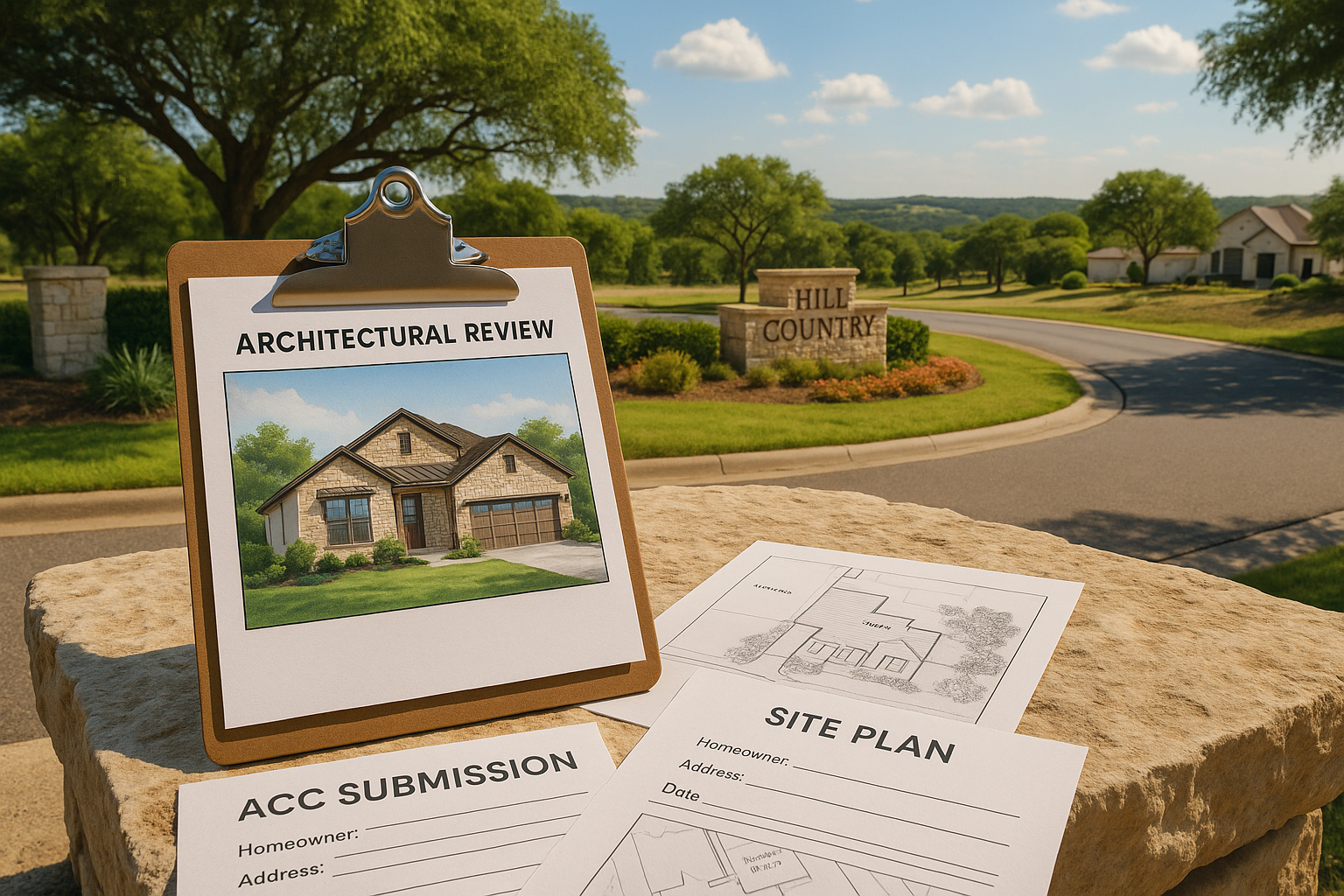
A homeowner’s guide to navigating HOA/ACC design reviews in the Hill Country.
Know your CC&Rs, design guidelines, and management contacts first
In many Hill Country communities, your first approvals won’t come from the county—they’ll come from your neighborhood’s Architectural Control Committee (ACC) or Design Review Committee. These groups enforce the deed‑recorded Design Guidelines and CC&Rs that shape appearance and construction standards: exterior materials and colors, roof forms, setbacks beyond code minimums, fencing, landscaping, lighting, and sometimes site placement. Getting this process right speeds your build and reduces costly redesigns. Start by gathering the core governance documents: declaration of covenants, conditions, and restrictions (CC&Rs); bylaws; design guidelines; and the association’s management contact. In Texas, many of these basics (including the manager and contact data) are referenced in the HOA Management Certificate now centralized at the state level: Texas HOA Management Certificate portal. Walk your lot with design rules in hand. Note view corridors to preserve, tree stands to protect, and slopes that may trigger retaining walls or stepped foundations—then cross‑check these realities with guideline sections on height, massing, and materials. Many Hill Country HOAs prefer limestone or limestone‑look exteriors, standing‑seam metal roofs, and muted palettes, which dovetail with regional aesthetics and durability. Several also emphasize night‑sky friendly lighting and limits on glare; aligning early with dark‑sky best practices (full shielding, warm CCTs, motion controls) avoids late‑stage fixture swaps. If your home will include outbuildings (detached garage, workshop, guest casita), confirm whether secondary structures require separate submittals or additional screening. Plan your submission with the same discipline you apply to permits. Include scaled plans, elevations, a site plan that shows driveway, grading, drainage approach, well/septic positions if applicable, and all visible exterior features. Provide samples or high‑quality photos of materials and fixtures. When owners partner with a builder experienced in HOA/ACC reviews, the package speaks the association’s language, addresses common concerns before they’re raised, and moves on a predictable timeline. For a legal overview of property‑owner associations and restrictive covenants in Texas, start with the Texas State Law Library’s guide: Texas State Law Library: Restrictive Covenants.
Submittals that win: plans, materials, lighting, and site standards
Winning approvals is mostly about clarity and completeness. Most ACCs require a full submittal package that includes: scaled architectural plans and elevations; a site plan with building footprint, driveway, drainage approach, and utility locations; exterior materials and colors (stone, stucco, siding, roofing, metal accents); landscape concept; fencing, gates, and retaining walls; and lighting cutsheets. Hill Country communities often emphasize natural materials, muted palettes, shielded exterior lighting, and native landscaping—aligning with regional dark‑sky values and wildfire awareness. Match your package to the checklist in the governing documents. Many associations publish design guidelines and application forms; if you can’t find them, request the latest version from the manager listed on the association’s Management Certificate in the state database at Texas HOA Management Certificate database. Include product cut sheets for visible elements (roofing profile, windows, doors, garage doors, lighting), photos of precedent projects where helpful, and a color/material board. Where communities reference dark‑sky or night‑friendly lighting, cite compliance explicitly; Dripping Springs offers an overview of dark‑sky lighting principles at Dripping Springs lighting ordinance overview, and the Hill Country Alliance Night Skies program is a respected reference at Hill Country Alliance Night Skies program. Expect at least one revision round. Encourage the committee to consolidate comments and cite specific guideline sections, and offer quick alternatives if a selection is questioned (e.g., a different standing‑seam profile, a warmer exterior lighting CCT, or modified fence picket spacing to meet wildlife or aesthetic concerns). Keep communications professional and centralized—True Stone manages submittals, responses, and updates in a single project thread so nothing is lost between board meetings. If your project straddles an ETJ or unique jurisdiction, note any city or county code requirements that shape design; being upfront about constraints often shortens reviews.
Approvals to keys: timelines, meetings, and avoiding costly delays
From first conversation to final inspection, successful HOA navigation is a structured process. Start by confirming meeting calendars and submission deadlines; some committees meet monthly, others more frequently during building season. Build a simple timeline that back‑calculates from your desired groundbreaking, leaving room for one or two comment cycles. Schedule a pre‑submittal meeting with the manager or ACC chair if allowed—briefing them on your site plan, materials, and lighting can head off surprises. During construction, keep the association informed about milestones that affect the community (driveway work, heavy deliveries, short‑term street parking for trades). If your rules require site signage, portable toilets screening, or designated contractor access times, make compliance visible. Photograph adherence to tree protection, erosion controls, and trash management—images calm nerves and build goodwill. If a disagreement arises, rely on documents and process. Request citations to specific guideline sections; submit a concise response with clarifications, substitutions, or a variance request tied to the stated purpose of the rule (e.g., preserving neighborhood character or protecting night skies). Legal resources and plain‑language explanations of POA powers and restrictive covenants are compiled by the Texas State Law Library at Texas State Law Library: Property Owners’ Associations. For statewide transparency tools (manager contacts and certificates), use Texas HOA Management Certificate Search. With thorough packages, respectful communication, and an experienced builder stewarding the process, most Hill Country owners move from submittal to shovels without drama—and with a design that fits the land and the neighborhood.