.png?width=400&height=133&name=TRUE%20STONE%20LOGO%20(1).png)

Unlock the potential of your Texas Hill Country property with a proven roadmap for building a custom home that reflects your vision and maximizes your land’s value.
Evaluating Your Land: Site Feasibility and Preparation
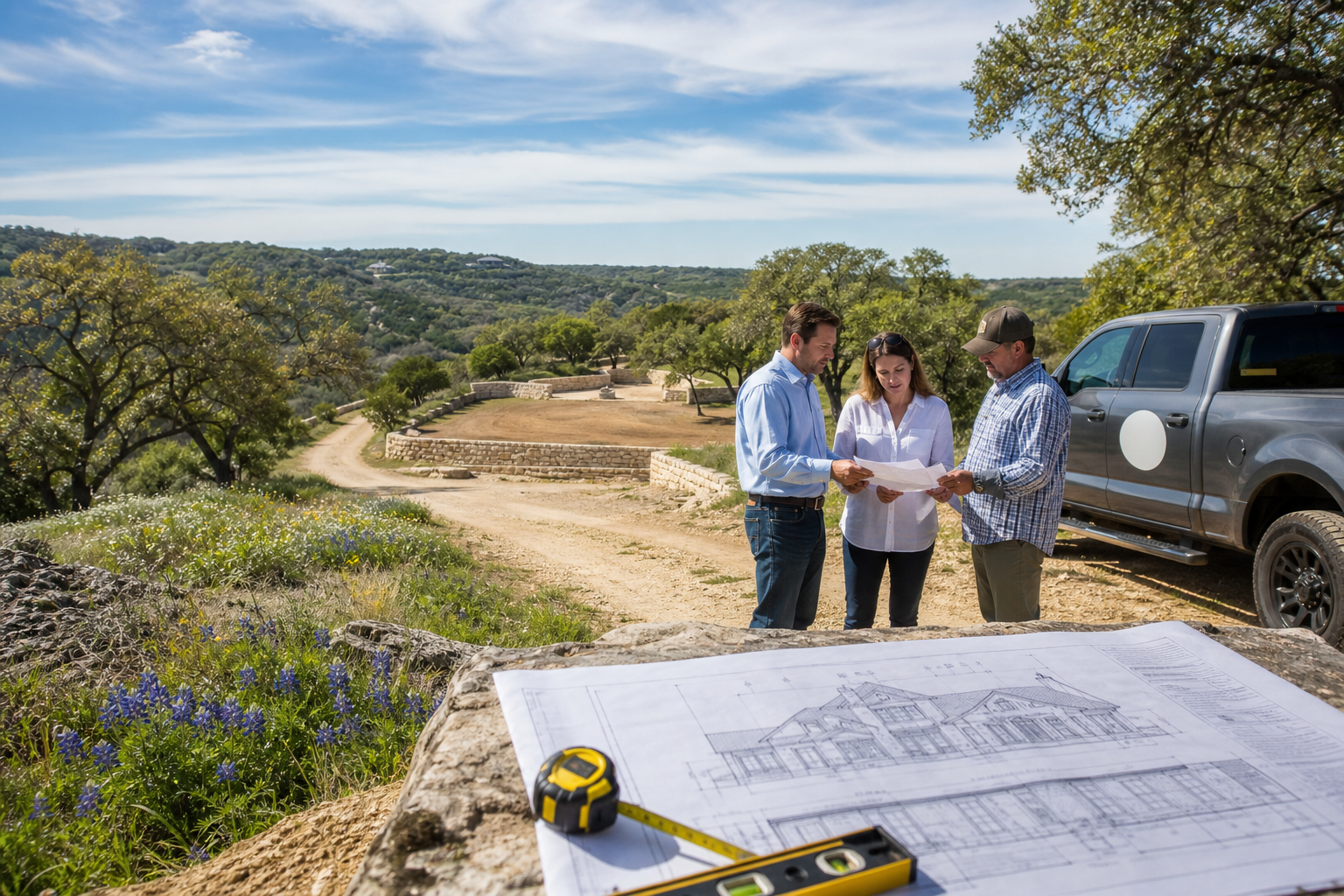
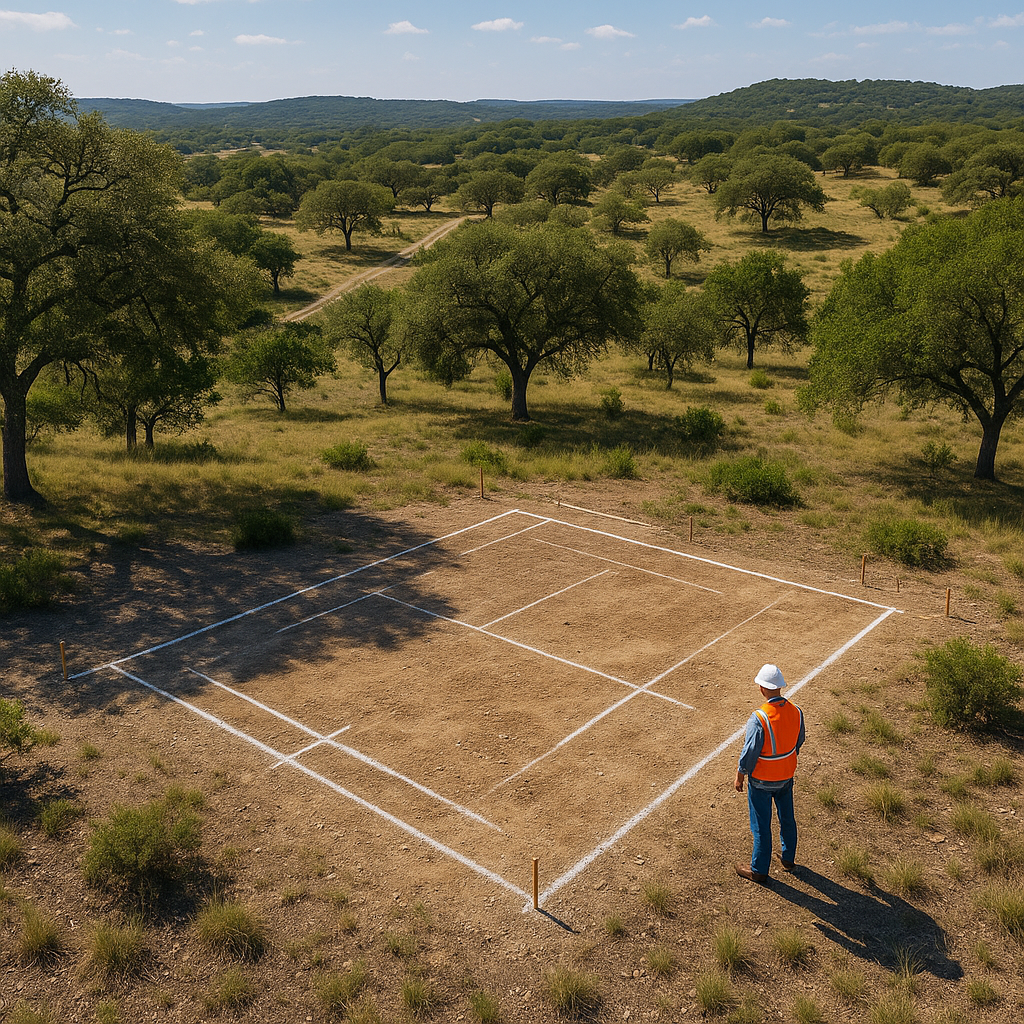
Before breaking ground, it’s essential to assess your land’s physical, legal, and logistical constraints. Site feasibility studies should include a topographic survey, soils report, and identification of any easements, setbacks, or floodplain issues. This ensures your future home is positioned for optimal views, drainage, and access while complying with local regulations.
Preparation may also involve land clearing, tree preservation planning, and preliminary utility connections—including water, electricity, and septic or sewer solutions. In the Texas Hill Country, rocky soils and sloped lots are common, so engineered foundation planning and early driveway layout can have a significant impact on your overall build cost and timeline.
Navigating HOA Requirements
If your property is governed by a Homeowners Association (HOA), familiarize yourself with their architectural guidelines and approval processes. HOA requirements may dictate exterior materials, roof pitches, fencing, landscaping, and even home size or placement.
Early coordination with the HOA can prevent costly design revisions or delays. Submit your proposed plans for review and ensure you have all documentation—site plans, elevations, and material samples—ready for the architectural review committee. True Stone Custom Homes offers experience navigating HOA processes unique to Hill Country communities, streamlining approvals and compliance.
Designing a Home That Fits Your Lot and Lifestyle
Custom home design begins with understanding your land’s unique characteristics and your personal vision. Consider your priorities—maximizing views, outdoor living spaces, accessibility, and energy efficiency. Work with a designer or architect experienced in Hill Country lots, who can balance aesthetics, site orientation, and practical needs such as solar exposure and prevailing winds.
Flexible floor plans, creative use of topography, and integration of native materials all contribute to a home that feels purpose-built for its setting. Smart home infrastructure, future-proofing for EV charging, and sustainable systems should be integrated from the blueprint stage to maximize long-term value.
Selecting the Right Builder and Assembling Your Team
Choosing a builder with deep experience in Texas Hill Country conditions is critical. Seek out professionals who provide transparent communication, detailed specifications, and local trade relationships. Your team may include a builder, architect, engineer, and interior designer—each contributing specialized knowledge to bring your vision to life.
True Stone Custom Homes offers a turnkey process, coordinating all aspects of site engineering, permitting, construction, and finish selection. This integrated approach minimizes surprises and ensures quality control at every stage, from initial survey to final walk-through.
Budgeting, Timeline, and Setting Clear Expectations
Establish a realistic budget early, accounting for site-specific costs such as foundation engineering, utility connections, and landscape requirements. Work with your builder to define detailed allowances for finishes, appliances, and fixtures, and use disciplined bidding to prevent change-order surprises.
Set a clear project timeline with defined milestones—permitting, foundation, framing, inspection, and final completion. Regular progress meetings and milestone inspections help align expectations and provide transparency. True Stone Custom Homes emphasizes upfront planning and value engineering, delivering projects on time and within budget while maintaining the high standards that define Hill Country luxury.
Email with any questions to build on your lot and getting started: Joseph@TrueStoneHomes.com