.png?width=400&height=133&name=TRUE%20STONE%20LOGO%20(1).png)


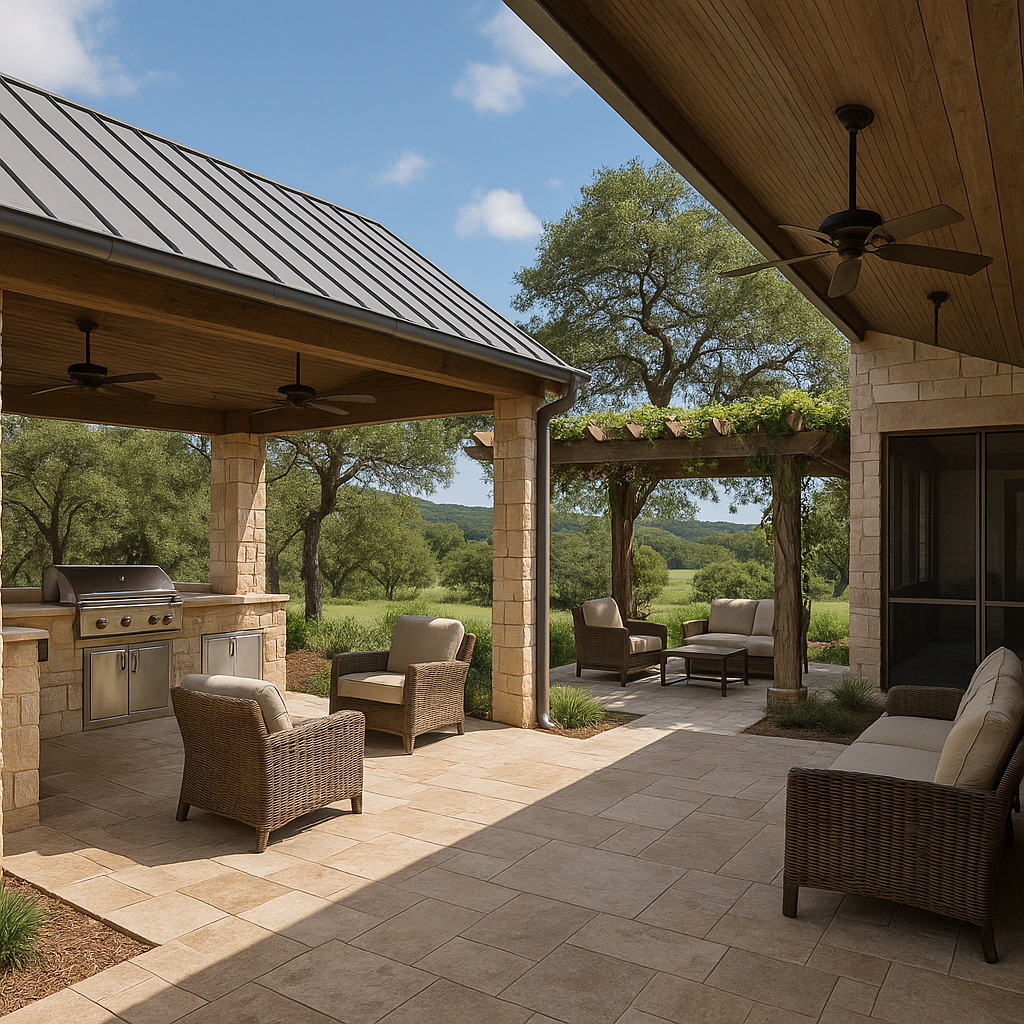
Design shade, screens, and kitchens for outdoor spaces you’ll use daily.
Plan microclimates: sun, shade, breeze, bugs, and views
Outdoor living succeeds when it’s tuned to the Hill Country’s climate and your lot’s microclimates. Start with a simple site study: where is morning sun pleasant, where does the late‑day west sun bite, and where do breezes come from in spring and summer? Map shade from live oaks and structures and think in zones—quiet coffee porch, grilling court, screened dining, sunny pool terrace. Give each zone a job and locate it where conditions help rather than hurt. A southeast‑facing porch often delivers the best year‑round comfort: warm morning light, afternoon shade, and protection from northwest winter winds. On west exposures with a view you can’t give up, use deep overhangs, trellises, or operable screens to tame heat and glare. Bugs are a design input, not an afterthought. Plan a fully screened room sized for real dining and lounging, and pair it with outdoor‑rated ceiling fans that move air across seating. Choose fans with larger diameter, gentle pitch, and quiet motors; high‑speed, noisy fans make conversation tiring. For seasonal mosquito strategy, reduce standing water and consider fans and screened zones as first lines of defense; a quick primer with prevention tips is available from Texas A&M AgriLife at Texas A&M AgriLife mosquito prevention tips. Where views and dark skies matter, plan night lighting that’s warm and shielded so you see stars, not glare—best‑practice resources live at DarkSky International homepage and the region’s guidance via Hill Country Alliance Night Skies. Finally, make circulation obvious and safe. Connect house to outdoor rooms with level, well‑lit paths; keep door thresholds flush and use non‑slip finishes on porches. Size stairs broad and shallow with handrails on at least one side. If your lot slopes, terrace outdoor rooms in short steps rather than forcing one big platform—this feels natural and lowers retaining costs.
Porches, screens, and outdoor kitchens that truly work
Porches are the Hill Country’s signature move—and details make them livable year‑round. Aim for 10–12 feet of depth at main seating porches so furniture doesn’t crowd walk paths. A standing‑seam metal roof with a ventilated, light‑colored deck keeps heat down; add insulation above the porch ceiling when it doubles as a roof over conditioned space. For multiply‑used spaces, design convertible edges: motorized screens, sliding panels, or steel trellises with climbing natives to shift shade and bug protection seasonally. Outdoor kitchens should cook beautifully and clean easily. Give the grill a safe, ventilated spot with noncombustible surrounds and a hood that actually captures smoke; add a prep sink, durable counters (honed granite, sintered stone, or stainless), and a small undercounter fridge. Keep the work triangle compact and away from play paths. Maintain safe clearances from combustible materials and mind basic grill safety; the National Fire Protection Association’s overview is a helpful homeowner refresher: NFPA: Grilling safety. If you love pizza or smokers, design flues and wind screens to keep smoke off seating. Decks, rails, and steps are safety systems. Follow guard and stair best practices and confirm local code adoptions; a plain‑English overview of common deck requirements (heights, guards, and loads) is summarized at UpCodes: Decks overview. Even when you build in stone and slab, borrow those safety dimensions for outdoor steps and benches. Choose easy‑care finishes: integral‑color concrete, sealed limestone, porcelain pavers on pedestals, or composite decking for shade‑free zones. Place hose bibs and drains where clean‑downs are easy, and keep an equipment closet nearby for grill brushes, covers, and cushions.
Lighting, power, code basics, and easy upkeep in Texas
Lighting, power, and maintenance routines determine whether your outdoor rooms feel effortless. Design layers of light at low color temperatures (2700K or below) and choose fully shielded fixtures that keep light on the ground; you’ll preserve the Hill Country’s night skies and improve visibility. See the city‑level example of dark‑sky rules at Dripping Springs lighting ordinance overview. Put paths on low‑level markers, entries and steps on downlights, and occasional‑use floods on manual scenes or timers. Provide plenty of exterior outlets for heaters, fans, and holiday lighting; specify in‑use covers and GFCI protection. Power and water planning prevents retrofit headaches. Stub a gas line and a dedicated electrical circuit to the grill island, run a spare conduit for future speakers or Wi‑Fi access points, and locate hose bibs at every outdoor room. If you expect winter cold snaps, place quick‑disconnects and shutoffs where they won’t freeze. For screened rooms and porches, specify quiet, outdoor‑rated fans and mount them high enough to move air without buffeting diners. Finally, write a simple care plan. Schedule seasonal sealing of horizontal stone, check fasteners and fans each spring, and clean/adjust door sweeps and screen tracks as part of your normal home maintenance. Keep exterior cushions and covers in a ventilated storage bench to prevent mildew. With a site‑first plan, convertible shade and screens, and code‑smart kitchens, you’ll have outdoor rooms that serve coffee at dawn, naps at noon, and gatherings long after sunset—without fighting heat, bugs, smoke, or glare.